Deepening our Connection with Nature through Education and Exploration
Nature Studies
Our core program in elementary schools for over 35 years, Nature Studies provides hands-on outdoor education in Juneau K-6th grade classrooms. We strive to provide every Juneau child a foundation in the outdoors, and a sense of comfort and curiosity in nature. Our programs include science curriculum-integrated lessons with hands-on field trips in the stunning natural areas accessible to Juneau schools.
Made possible thanks to support from Discovery Southeast members, Hecla Greens Creek, and each school’s PTA.
More Information
Although Southeast Alaska has endless outdoor opportunities, many children in our community do not grow up spending time outdoors. Nature Studies introduces children to the outdoors by taking each classroom outdoors with a skilled naturalist each season. Additionally, the program provides natural history classroom instruction tied to the school’s science curriculum.
At a time when children are focused on more screens, for more hours, and at earlier ages, Nature Studies teaches children how to identify wildlife tracks, how to dress for the weather, and how to open their senses to the natural world. We introduce children to pursuits that will serve them a lifetime, whether that is an interest in geology or a passion for hiking.
By targeting all K-6th grade classrooms, we seek to serve the entire community, including children who otherwise would not be introduced to the outdoors.
The Nature Studies curriculum is aligned with the core content of state and school district curriculum requirements for the sciences, and also features safety training, team-building exercises, and role-play games — activities depend on the grade and the season. Lessons include forest and watershed ecology; wildlife studies (habitats, predator/prey relationships, tracking); resident and migratory birds; the intertidal zone; forest succession; and fungus, bacteria, and invertebrates, among other subjects.
There’s no need to enroll. Nature Studies takes place in Juneau classrooms every season, thanks to the support of Parent Teacher Associations, Discovery Southeast member donations, and the partnership of local foundations and businesses such as Hecla Green’s Creek.

Outdoor Explorers
Week-long outdoor summer camps for children 4-14 years old. We offer small group size and an excellent staff of knowledgeable adults. An open format allows inquiry-based learning and plenty of unstructured time, with activities emphasizing local natural sciences. Made possible thanks to the US Forest Service and the citizens of the City and Borough of Juneau through sales tax revenue.
Check back in February 2027 for more information about 2027 summer camps.

Pre-K Programming
Walking Field Trips
At Discovery Southeast, we’re always exploring new ways to help children connect with nature. We’re currently piloting a small program for preschool groups throughout Juneau, offering walking field trips centered on curiosity, connection, and exploration.
If you’re a preschool teacher in Juneau and would like to bring learning outside, we’d love to hear from you! Contact us at info@discoverysoutheast.org.
Haadaa Héeni Forest Preschool
A program for young children aged 3-5!
Haadaa Héeni (Lingít, meaning “water all around us”) encourages wonder in the natural world and invites children to enter the forest using all of their senses. We follow a Forest Kindergarten model and spend all of our time outside playing, exploring, discovering, and learning together in a very special forest environment.
The program runs Tuesdays and Thursdays from 9:00 AM – 12:00 PM during the school year. Our sessions are seasonal: fall, winter, and spring.
Check out our blog post for 2026-2027 program and registration information. Registration for our next preschool session will open in mid October!

Discovery Days & Spring Break Camp
Day-long outdoor field trips in nature during conferences, inservices or school holidays (including Spring Break). Each day brings a new destination in Juneau’s fabulous backyard. Sliding-scale tuition makes this program affordable for every family. Made possible thanks to the US Forest Service and the citizens of the City and Borough of Juneau through sales tax revenue.
Our next program dates for Discovery Days are October 19 and 20 and November 11, 12, and 13. Register here!
Enrichment & After School Programs
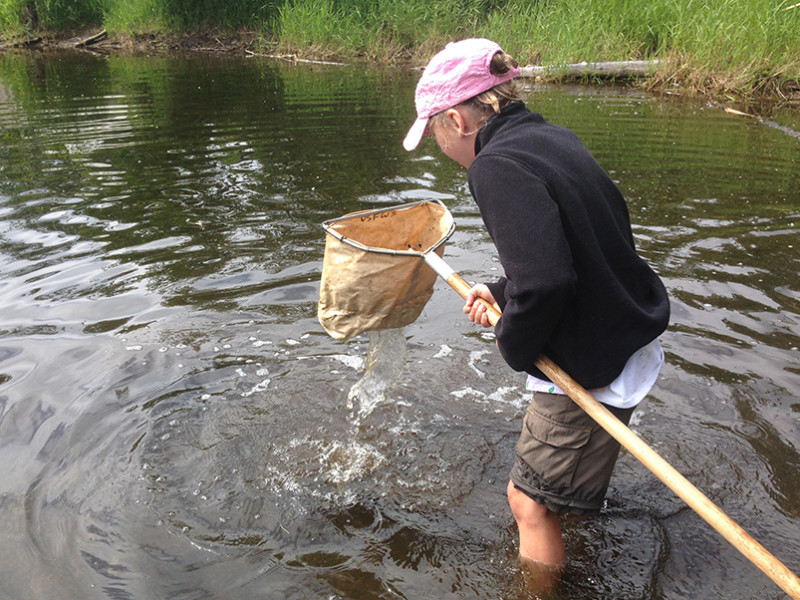
Our enrichment, community, and after school programs provide accessible spaces for children to explore, learn, and grow in the natural world. We now offer an after school “Outdoor Club” at Kax̱dig̱óowu Héen Elementary School, complementing existing programs at Gruening Park and Thunder Mountain Middle School. In addition, we support school and community gardens throughout Juneau.
The Importance of After School
After school is an important time when kids’ needs, emotions, and energies are at their peak. We make the most of this brief, transitional time by embracing the energy and heading outdoors to explore together. In this setting, children develop recreation skills, build community, and gain confidence, all while forming lifelong healthy habits. Our high staff-to-student ratio allows us to meet students’ diverse needs and foster meaningful relationships.
Why Gardening?
Gardening offers a range of powerful benefits for children, making it a natural fit for Discovery Southeast programming. By digging in the soil, planting seeds, and caring for growing plants, kids develop a hands-on connection with the environment that fosters curiosity, wonder, patience, and responsibility. They not only learn about ecosystems and life cycles but also experience the joy and reward of nurturing living things. Children come to understand themselves as part of the natural world, connected to all that grows around us.
Gardening encourages physical activity, enhances fine motor skills, and supports healthy habits. Plus, the fresh produce we harvest serves as delicious, nutritious snacks for students and families!

Teacher & Community Education
Learn from great naturalists in an awesome outdoor classroom! Our programs include local afternoon or multi-day programs around Juneau and occasional longer field expeditions. Teachers earn continuing education credits (500 level courses) while exploring gorgeous areas and learning the natural history of Southeast Alaska. We offer affordable tuition, thanks to generous support from our partners.
Why Professional Development?
Juneau Nature Seminars are designed to ensure teachers have all the tools needed to engage their students outdoors for years to come. Working with our classrooms outdoors can invigorate lessons, bringing abstract concepts to life and engaging children who may not be as engaged indoors.
There are three main components to our courses:
- Time outdoors to reconnect and explore our own curiosity,
- Natural history science information to inform the lessons we teach,
- The soft skills to make teaching outdoors second nature.
Past Teacher Expeditions (History is bound to repeat itself)
The Outdoor Kitchen: Where’s the Food? | How habitats feed the animals of Lingít Aaní (2024)
Everybody eats. Where food resides depends on the many factors that make up a habitat. We will explore shoreline, peatland and forests with the guiding question of “Whereʼs the food?” Whereʼs the food for porcupine? For beetles? For eagles? For humans? The course will visit two locations, two times. The first visit at each location being focused on what animals eat, and the second being focused on what humans eat.
Natural and Cultural History of Jánwu (Mountain Goat) in Áak’w Aaní (2023)
Discovery Southeast naturalists Steve Merli and Richard Carstensen and local weavers will guide a birthing-season exploration of our most watchable large terrestrial mammal and her precipitous habitat. We will cover observational techniques, age and gender ID, seasonal movements, foraging strategies, ecology of steep slopes & alpine-subalpine high country (“Goatlandia”), and ancient relationships of goats with the human residents of mainland Southeast Alaska.
Habitats of Áak’w & T’aakú Aaní – The Outdoor Classroom (2022)
This entirely field-based class helps educators explore the unique ecological features of Fish Creek watershed, a site easily accessible to field trips for K-12 classes throughout the Juneau School District. This course will focus on coastal and terrestrial habitats at Fish Creek, with special emphasis on human use and impacts. A full-watershed approach is facilitated here by the road to Eaglecrest. Time will be set aside during each field day for solo journaling, which will be submitted for credit, and sharing of thoughts on how these concepts/experiences can be introduced to students
Lessons in our Own Backyard (2017)
Discovery Southeast naturalists and partners will show you how to plan and implement purposeful, engaging, place-based learning experiences outside. Using the Next Generation Science Standards science and engineering practices as a guide, you will learn how to design lessons that get students to think and engage with the outside world by immersing themselves in it.
Crossroads in Cross Sound: Nature as an intersection of People and Place (2016)
In one of the most stunning locations imaginable, Crossroads in Cross Sound explores the interaction of humans in the natural world and how we teach that to our classrooms. Teachers come away feeling a deeper connection with nature, possessing tools for working with students outdoors, and better-understanding the natural history of Southeast forests, marine environments, and even global climate change.
We depart Juneau via boat for a breath-taking morning trip around the northern tip of Admiralty Island, through Icy Strait, past Glacier Bay to Cross Sound. Our class is hosted by the Inian Island Institute, at the well-known Hobbit Hole lodge. We will camp in wall tents or out buildings, but there’s also an option to reserve space at the Hobbit Hole for those interested.
We’ll be on a wilderness island, in one of the most powerful, active waterways in southeast, sandwiched between Glacier Bay National Park and the wilderness of the major Tongass islands. During our five days (four nights) at Inian Islands, Discovery Southeast Naturalists and guest instructors will lead hands-on classes exploring natural and cultural history, and there will be plenty of open time for reflection and exploration. Teachers seeking credit will have the opportunity to develop lesson plans for their classrooms. We’ll return to Juneau by boat on the 16th.
Juneau Icefield from Above and Below (2015)
In coordination with the Juneau Icefield Research Program and UAS instructors Cathy Connor and Mike Hekkers, this course allows teachers to explore Juneau’s most iconic landform. This five day trip spends three days (two nights) at Camp 17, just off the Juneau Ice Field and Blackerby Ridge. Learn glaciology, geology, and climate studies on the ice, then spend time at sea level at one of the world’s best resources for public education on climate change, the Mendenhall Glacier Visitor Center. Discovery Southeast naturalist Richard Carstensen will lead lessons on the natural history of glaciers and deglaciated regions, and naturalist Steve Merli will lead sessions on working with students outdoors. Lessons emphasize how to bring the material back to the classrooms—or the classrooms to the outdoors. Participants seeking continuing education credit will develop a final project consisting of a lesson plan for their classes. Made possible through generous support from the Mountaineers Foundation and Northstar Trekking. Check it out on KTOO.
Ecology “Out the Road”: Eagle River to Berner’s Bay (2015)
Out the road…like only in Juneau. Wild watersheds with some of Southeast’s richest, most diverse old-growth habitat support brown bear and moose. This hands-on, multidisciplinary course will prepare Juneau educators for school-year activities in the region commonly referred to as ‘out-the-road,’ from Asx’ée, twisted tree (Eagle River) to Daxanáak, between 2 points,(Berners Bay). It will deepen teachers’ understanding of the natural and cultural history of these mostly undeveloped watersheds, as well as their comfort level in bringing students here. For participants from outside the Juneau School District, our studies and explorations of this incomparable natural area will bring familiarity with the interwoven fields of geology, hydrology, ecology, and cultural studies that can be applied throughout our coastal rainforest bioregion.
Brown Bears of Admiralty Island, Pack Creek (2005-2015)
Accessing the renowned bear habitat of Pack Creek by float plane, teachers camp and kayak in this stunning, wild area for five days. This is a behind the scenes experience of an area most tourists only get to peek into. Teachers immerse themselves in this astounding place with a knowledgable instructor and an experienced guide, learning the natural history of the area and its bears, and exploring how to bring those lessons alive for their classes.This trip is made possible, and affordable for teachers, thanks to generous support from Coeur Alaska.
Whales of Icy Strait (2008-2014)
Study the behavior, habitat and management issues of humpback whales and other marine mammals such as sea lions, seals and killer whales while kayaking in Icy Strait and camping along the north shore of Chichagof Island. We explore the ecological connections between terrestrial and marine systems and the effects of human use patterns on the landscape through forest, meadow and stream walks in the uplands bordering these rich marine mammal feeding waters.
Seals, Glaciers, and Climate Change: Kayaking the Wilderness of Endicott Arm (2010-2014)
Teachers spend five days kayaking and camping in Endicott Arm, with instruction from the US Forest Service. Topics include glaciers and climate change as well as wilderness and wildlife, with a focus on seals and pupping. Endicott Arm is an intimate, gorgeous, remote, and stunning location to learn about wilderness, glaciers, and climate change.
Online Resources
Access our fall/winter nature journals (to complete at home), and view all our remote-learning lessons and other resources at our “Online Lessons” page.

Special Projects
Discovery Southeast is proud to offer custom educational or research programs for groups or projects. Our naturalists are excellent educators and extremely knowledgeable.
If you have a project or program that you’d like our assistance with, please contact us at info@discoverysoutheast.org.

Participant Agreement
As part of registering for a Discovery Southeast program through our website, please complete our online Participant Agreement here.
The form is for the parent/guardian to complete, unless the participant is 18 or older, in which case the participant should complete it.
There are three parts:
1) Contact Information,
2) Medical and Health Information, and
3) Legal Acknowledgement and Waivers.
Please take time to complete it accurately and carefully. If you have any questions, just ask. We’re at info@discoverysoutheast.org
If you’d like to preview the forms, you can see a sample PDF here. However, please ultimately complete the online version, not the PDF version.

Great Programs Thanks to Great Partners